
Blood pressure calculator: category, average, mean arterial pressure and pulse pressure
Enter one or more readings. The calculator shows the category under the US guideline, the average, the mean arterial pressure (MAP) and the pulse pressure.
By Roman KochUpdated 2 min read
On this page
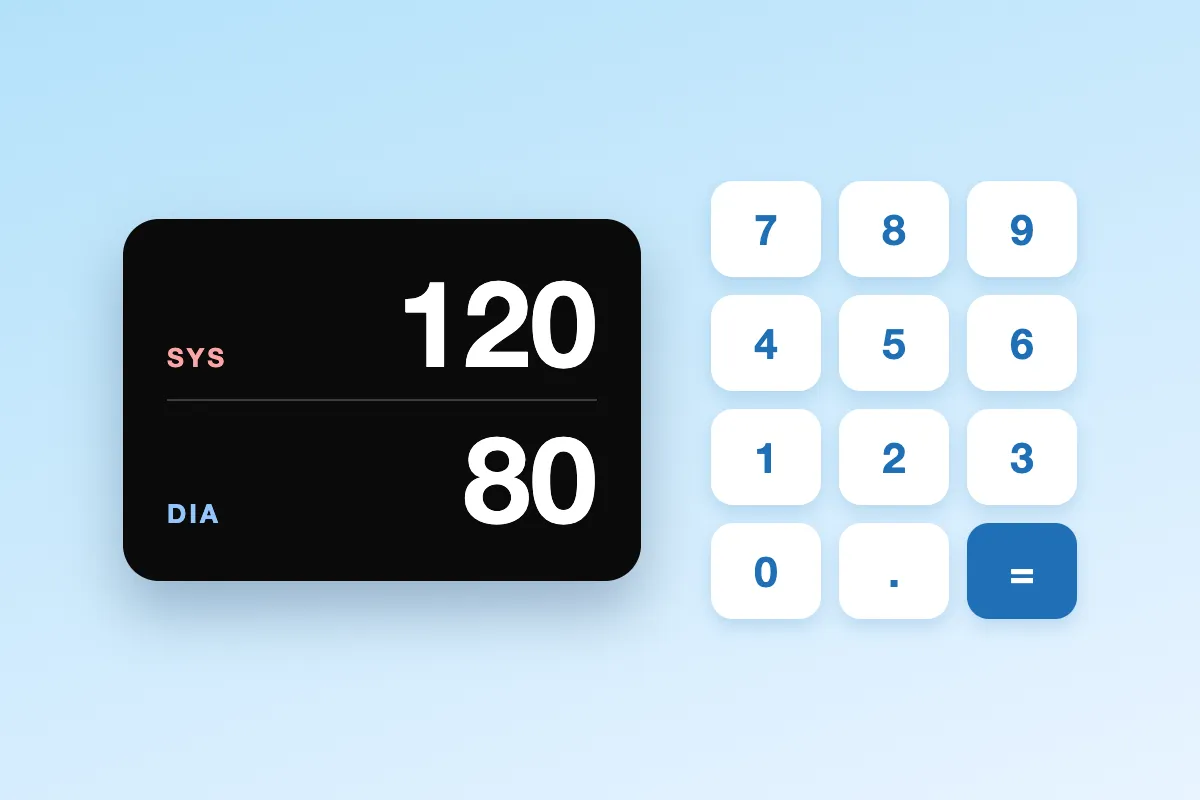
Type in your systolic and diastolic values, and your pulse if you like. For several readings, add them one by one: the calculator then uses their average. Everything is calculated in your browser.
Your result
Enter a reading to see the result.
Your values stay in your browser and are not sent anywhere. The result is a guide, not a diagnosis — only a doctor can confirm high blood pressure.
How the calculator sorts your readings
It uses the categories of the US guideline from the American Heart Association and the American College of Cardiology. Where the table says “or”, one value in the range is enough.
| Category | Systolic (upper) | Diastolic (lower) |
|---|---|---|
| Normal | below 120 | and below 80 |
| Elevated | 120–129 | and below 80 |
| Stage 1 | 130–139 | or 80–89 |
| Stage 2 | 140 or higher | or 90 or higher |
| Severe | higher than 180 | and/or higher than 120 |
Source: American Heart Association. Only a doctor can confirm a diagnosis.
Mean arterial pressure (MAP)
The mean arterial pressure is the average pressure in the arteries over one heartbeat — across the phase in which the heart contracts and the phase in which it relaxes.
A common formula to estimate it: MAP = diastolic + 1/3 × (systolic − diastolic). For 120/80 mmHg that is 80 + 1/3 × 40 = 93 mmHg. The calculator rounds to whole numbers.
Pulse pressure
The pulse pressure is the difference between the two values: systolic minus diastolic. For 120/80 mmHg it is 40 mmHg.
Why use the average of several readings?
Blood pressure changes from one minute to the next. That is why doctors look at several readings instead of a single one, and why the US guideline speaks of average blood pressure. Take two readings one minute apart, ideally morning and evening over several days, and enter them all.
What the calculator cannot do
It does not diagnose anything. Only a doctor can confirm high blood pressure, based on repeated readings and an examination. If your readings are elevated, take them to your next appointment.
Sources
The blood pressure values in this article follow the US guideline (AHA/ACC 2025).
- Understanding Blood Pressure Readings. American Heart Association, 2025.
- Top Things to Know: 2025 High Blood Pressure Guideline. American Heart Association, 2025.
- Physiology, Mean Arterial Pressure (DeMers D, Wachs D). StatPearls Publishing, 2023.